Concrete Answers Series for Architects, Engineers and Developers | Click here for more answers


Flowable Fill
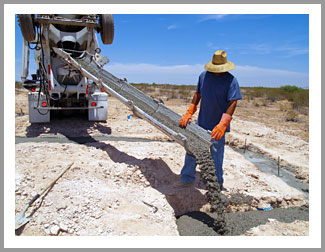
The versatile "liquid soil" which is placed as a flowable liquid, yet hardens and rapidly develops excellent load-bearing properties with no compaction necessary.
Flowable fill was initially developed over 20 years ago as a solution to reoccurring problems originating from poorly compacted soil or granular fill. Originally, flowable fill mixtures were comprised of large amounts of fly ash and water. Unfortunately, this type of mixture, although it has its advantages in certain applications, it experienced large volume changes due to the evaporation or dissipation of the mix water. Over the past decade, extensive research and technology advancement with flowable fill mixtures has led to its use in numerous applications. These include bedding and backfill for utility trenches, paving subbase, bridge abutment and retaining wall backfill.
Recent laws passed by the Environmental Protection Agency concerning below-grade fuel tanks have resulted in an increased use of flowable fill in other void-filling applications such as abandoned tanks, basements, tunnels and mines, sewers, and other underground structures.
Flowable fill mixtures are usually comprised of combinations of cement, water, fine aggregate, and fly ash or slag. Due to the nature of the product, many materials that do not meet the quality standards for use in concrete have been used successfully in flowable fill mixtures. Chemical admixtures specifically developed for use in flowable fill mixtures have also become more commonly-used as a result of their unique benefits on the performance properties of the mixture. Your local ready-mix producer may suggest mixes varying from these components, depending on their availability and the specified project requirements. The versatility in design of the flowable fill mixtures offers numerous advantages to the specifying engineer.
Continuing Education for Architects, Engineers, Developers and Owners
 Earning LEED® Credits by Utilizing Ready Mixed Concrete
Take a detailed look at the growing role played by ready mixed concrete in green building design and construction, including an overview of the LEED Green Building Rating System.
The Quantifiable Advantages of Concrete Parking Lots
With a free copy of NRMCA's Concrete Pavement Analyst (CPA) software, learn to produce detailed life-cycle cost comparisons of concrete and equivalent asphalt pavement designs.
Designing and Specifying Pervious Concrete
(Two-part Webinar)
Learn about pervious concrete pavement systems, engineering properties and construction techniques, including specifics to consider when drafting pervious concrete specifications.
These Webinars are AIA—registered and earn Professional Development Hours for participants.